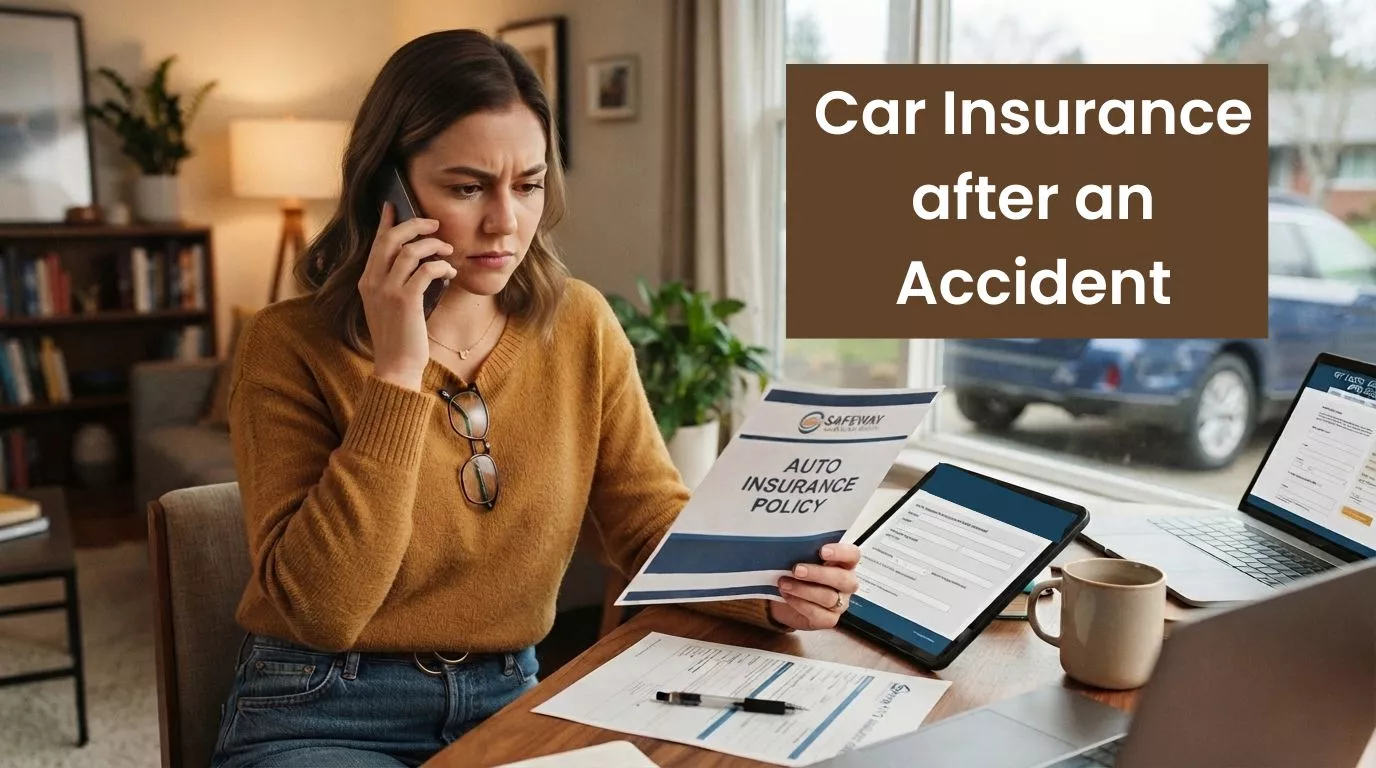
Yes, you can usually get car insurance after an accident in 2026. A crash rarely makes you uninsurable, but it often changes your rate, your discount options, and how closely an insurer reviews your application.
Your next quote depends on the accident itself, your driving record, any claim you filed, and whether you already had active coverage. If you need insurance soon, your best move is to compare quotes, answer every question honestly, and buy coverage that protects you without crushing your budget.
Key Takeaways
- You can usually buy or renew car insurance after a crash, even in 2026.
- An accident often raises your premium, especially if you caused it or filed a large claim.
- Different insurers price the same accident differently, so shopping around matters more than ever.
- You may lose safe-driver or claims-free discounts, but other discounts can still help.
- If you need coverage fast, avoid a lapse and give accurate accident details on the application.
Yes, you can still buy car insurance after an accident, but the price may change
Getting insurance after a crash usually comes down to price, not basic eligibility. Most insurers still offer coverage because you still need legal and financial protection on the road. What changes is how risky you look on paper.
A recent accident can push you into a higher rating tier. That doesn’t mean every company will treat you the same way. One insurer may see a single fender bender as manageable, while another may charge much more.
Why insurers still offer coverage after a crash
Insurers don’t expect every customer to have a perfect record forever. Accidents happen, and the market still needs a way to cover drivers after a loss. Current 2026 insurer guidance still follows that pattern, renewals and new policies usually stay available after a claim is settled or after the car is inspected.
Read also: Car Accident Lawyer for No Insurance
If your car has fresh damage, an insurer may ask for photos or an inspection before adding collision or comprehensive coverage. In some cases, it may exclude damage that already happened.
What usually changes after an accident, your premium, discounts, and approval risk
The biggest change is usually your premium. An at-fault crash, a large payout, or an accident with injuries can raise your quote more than a minor, not-at-fault incident.
You may also lose discounts tied to a clean record. Some companies ask more underwriting questions after a recent crash, especially if you also have tickets, a lapse in coverage, or multiple claims. So, buying car insurance after an accident often stays possible, but cheaper coverage gets harder to find.
How an accident can affect your car insurance quote in 2026
Insurers price risk by looking backward. A recent accident tells them you may file another claim sooner than a driver with a spotless history. Because of that, even one claim can change your renewal price or your quote with a new company.
The effect usually hits hardest in the first few years after the crash. Later, it matters less, assuming you keep a cleaner record.
Claims, tickets, and fault all play a role
Insurers often look at three things together: fault, claim history, and moving violations. A parking lot scrape with no payout won’t look the same as an at-fault crash with injuries and a ticket.
Many carriers also review your motor vehicle record and your claims history. In the US, claims history often shows up through a CLUE report from LexisNexis. Because of that, leaving an accident off your application can create delays, a higher premium, or a canceled policy later.
Why shopping around matters more after an accident
After a crash, rate differences can get wide. One company may sharply penalize a recent loss, while another may weigh your credit, location, mileage, or current coverage history more heavily.
That is why the first quote you see shouldn’t decide everything. If you’re shopping for car insurance after an accident, compare the same limits and deductibles across several insurers so the price difference means something.
What a recent accident can do to your discounts
A claim can wipe out your accident-free or safe-driver discount. Some companies also remove perks like disappearing deductibles after a loss.
Still, that doesn’t mean every discount disappears. Your state rules and the insurer’s rating system matter, so two similar quotes can land far apart once discounts change.
Ways to get coverage that fits your budget after an accident
You don’t have to accept the first painful number that shows up on your screen. A few practical choices can lower your cost without leaving you exposed.
Don’t let your policy lapse while you wait for repairs, a claim decision, or a better quote.
Compare quotes from several companies before you buy
Get quotes from more than one insurer, and keep the coverage details the same each time. Otherwise, a lower price may only mean weaker protection.
Read also: Top Car Insurance for New Drivers
It also helps to check both direct writers and independent agents. Some companies price recent accidents more aggressively than others, so a wider search can pay off.
Look for discounts you may still qualify for
Even after a crash, you may still save by bundling auto with renters or homeowners insurance, paying in full, or enrolling in autopay. In some states, a defensive driving course can help.
Telematics can also matter if your current driving is safer than your record suggests. Programs such as Progressive Snapshot, State Farm Drive Safe & Save, and Allstate Drivewise may offer savings, depending on your habits and state.
Choose the coverage you actually need, not just the cheapest option
Cheap coverage can backfire if your limits are too low. Liability insurance protects your finances, so don’t slash it without thinking about what a serious crash can cost.
You can lower your premium by raising your deductible, but only if you can pay that amount after another accident. If your car is older and paid off, review whether collision or comprehensive still makes sense. However, don’t drop coverage blindly, especially if the car still has real value to you.
What to do right after an accident if you still need car insurance
If you need coverage soon after a crash, stay organized. A rushed application with missing facts can slow everything down.
Gather the facts before you apply
Have the accident date, location, police report number if there is one, claim number, repair estimate, and basic details about the other driver ready. Keep photos of the damage and your vehicle identification number handy too.
If the car still shows visible damage, recent photos can help the insurer decide what it will cover now and what counts as pre-existing damage.
Be honest on the application and answer underwriting questions clearly
Insurers can usually verify accidents through driving records and claims databases. So, honesty saves time and prevents bigger problems later.
If you don’t know whether you were found at fault yet, say that. If a claim is still open, say that too. Clear answers help underwriting move faster.
Decide whether you need immediate coverage or can wait to compare
If your current policy is about to end, your car must be driven, or your state requires proof of insurance now, buy coverage before you risk a lapse. Continuous coverage often matters to insurers, and a gap can hurt your quote on top of the accident.
Read also: Low cost Insurance for Drivers
If you have a little time, compare quotes the same day and line up the new policy before canceling the old one. If standard insurers keep turning you down, contact your state insurance department and ask about assigned-risk options.
Conclusion
You can usually get insured after a crash in 2026. The accident may raise your rate, but it doesn’t usually shut you out of the market.
The smartest path is simple: compare quotes, tell the full truth about the accident, and buy coverage that protects your car and your finances. When you treat price and protection as a pair, you give yourself a better shot at a workable policy.

Marvin Lambert
Marvin LambertMarvin Lambert is a finance professional and financial advisor specializing in lending solutions, Car Insurance, personal finance, and consumer credit education. Through his writing, he helps readers understand practical money management strategies, borrowing decisions, and financial planning concepts in simple, actionable terms.

Pingback: Accident Claims Lawyers in Texas: What You Need to Know in 2026 - Smart Car Insurance - SCI USA