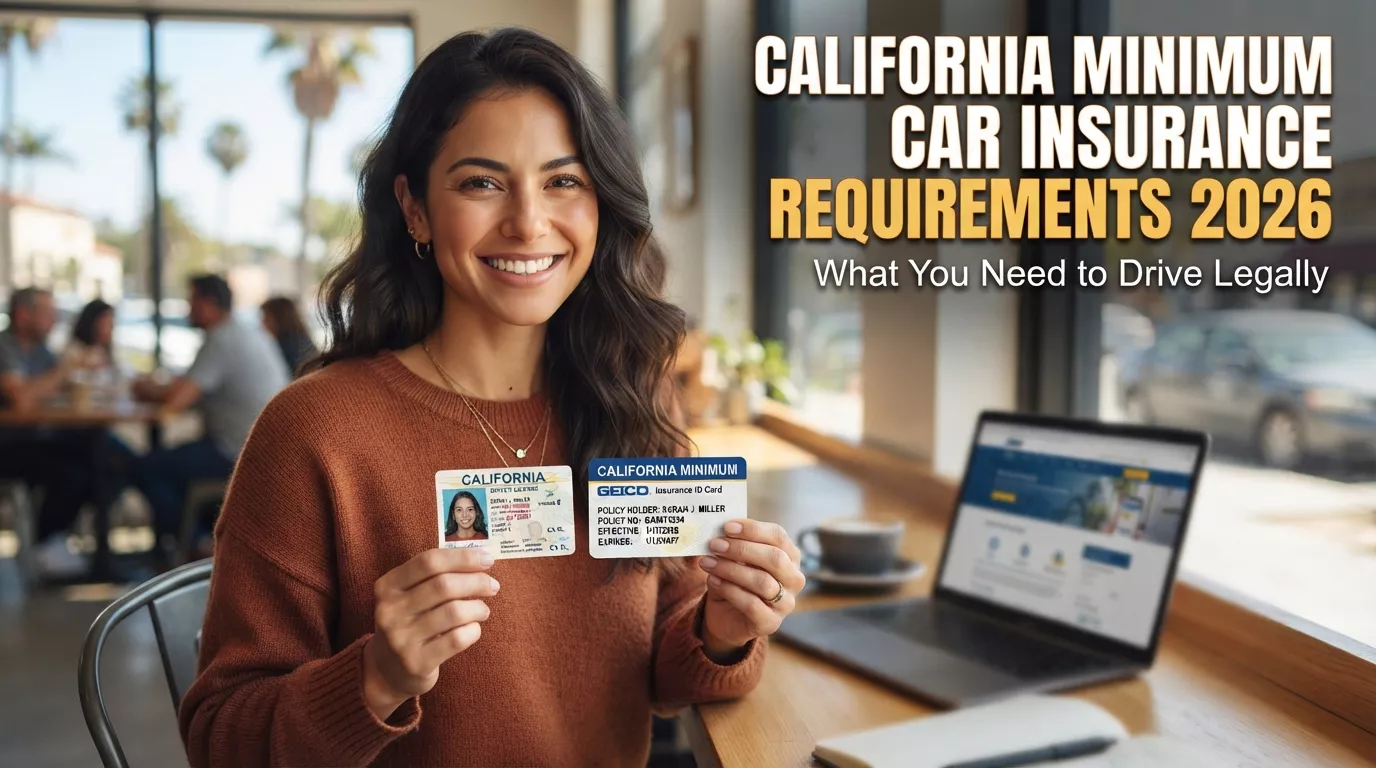
California drivers can’t treat minimum coverage like a formality. The state’s required liability limits rose to 30/60/15 on January 1, 2025, and they stay the same in 2026, so many people are still catching up at renewal time.
If you’re buying or renewing a policy, you need more than the shorthand. You need to know what the law requires, what it pays for, and where the minimum can fall short.
Key Takeaways
- California’s current legal minimum is 30/60/15 liability coverage.
- Those limits pay for damage you cause to others, not your own car or injuries.
- The state replaced the old 15/30/5 limits in 2025 after decades without a change.
- Drivers must carry proof of insurance, or another approved form of financial responsibility.
What the California minimum car insurance requirements actually are
California now requires $30,000 for bodily injury to one person; $60,000 for bodily injury per crash; and $15,000 for property damage per crash. These limits apply to new policies and to renewals issued on or after January 1, 2025.
This coverage protects other people when you cause a wreck. It does not pay to fix your car or cover your own medical bills.
Why California moved from 15/30/5 to 30/60/15
Senate Bill 1107, the Protect California Drivers Act, replaced limits that had stayed in place since 1967. Lawmakers raised them because medical care and car repairs cost far more now, and the higher minimum gives crash victims better protection.
How the liability limits work after a crash
Say you cause a crash and injure two people. One person has $40,000 in medical bills and the other has $25,000. Your policy would pay up to $30,000 for the first person and no more than $60,000 total for the whole accident, so you’d still face out-of-pocket costs.
What California drivers must carry besides insurance papers
You need proof of insurance during a traffic stop, when you renew registration, and after an accident. California also lets drivers show financial responsibility in other ways, although most people use a standard policy.
Ways to prove financial responsibility without a standard policy
The DMV accepts a $75,000 cash deposit, a $75,000 surety bond from a California-licensed company, or a DMV self-insurance certificate. These options fit unusual cases, not typical drivers.
What the minimum does not pay for
Liability coverage won’t pay for your own repairs, your own injuries, towing, theft, or vandalism. Collision and comprehensive can help with those costs, but the state doesn’t require them, and they don’t replace liability.
How much minimum coverage costs in California
Minimum liability in California often runs about $751 to $1,200 a year, based on late 2025 and 2026 rate benchmarks. That’s cheaper than full coverage, yet it still isn’t cheap in many ZIP codes.
What can make your premium go up or down
Your age, driving record, mileage, car type, ZIP code, and coverage history all affect price. A ticket or lapse can raise your rate fast.
When the cheapest policy may not be enough
Because California is an at-fault state, a serious crash can blow past 30/60/15 quickly. Higher limits can protect your savings, wages, and future income if damages exceed your policy.
Read also: Arizona Car Insurance Requirements in 2026
Common mistakes California drivers make when renewing or buying coverage
Many drivers assume the minimum protects their own vehicle, or they confuse collision with liability. Others auto-renew without checking whether their insurer already adjusted limits after the 2025 change.
Why a lapse in coverage can cause bigger problems
Driving uninsured can trigger fines, registration trouble, and much larger bills after a crash. A first offense can start at $100 to $200, and penalty assessments often push the total above $500.
What to check before you renew
Review your declarations page, confirm your proof of insurance is current, and compare quotes before renewal locks in. Also check whether the legal minimum fits your car, your savings, and how much you drive.
Conclusion
California’s minimum requirement is now 30/60/15, and that figure is only a starting point. It keeps you legal, but it may not protect you well after a bad crash.
Check your current limits, keep proof of insurance handy, and look hard at your risk before you settle for the cheapest option.

Marvin Lambert
Marvin LambertMarvin Lambert is a finance professional and financial advisor specializing in lending solutions, Car Insurance, personal finance, and consumer credit education. Through his writing, he helps readers understand practical money management strategies, borrowing decisions, and financial planning concepts in simple, actionable terms.