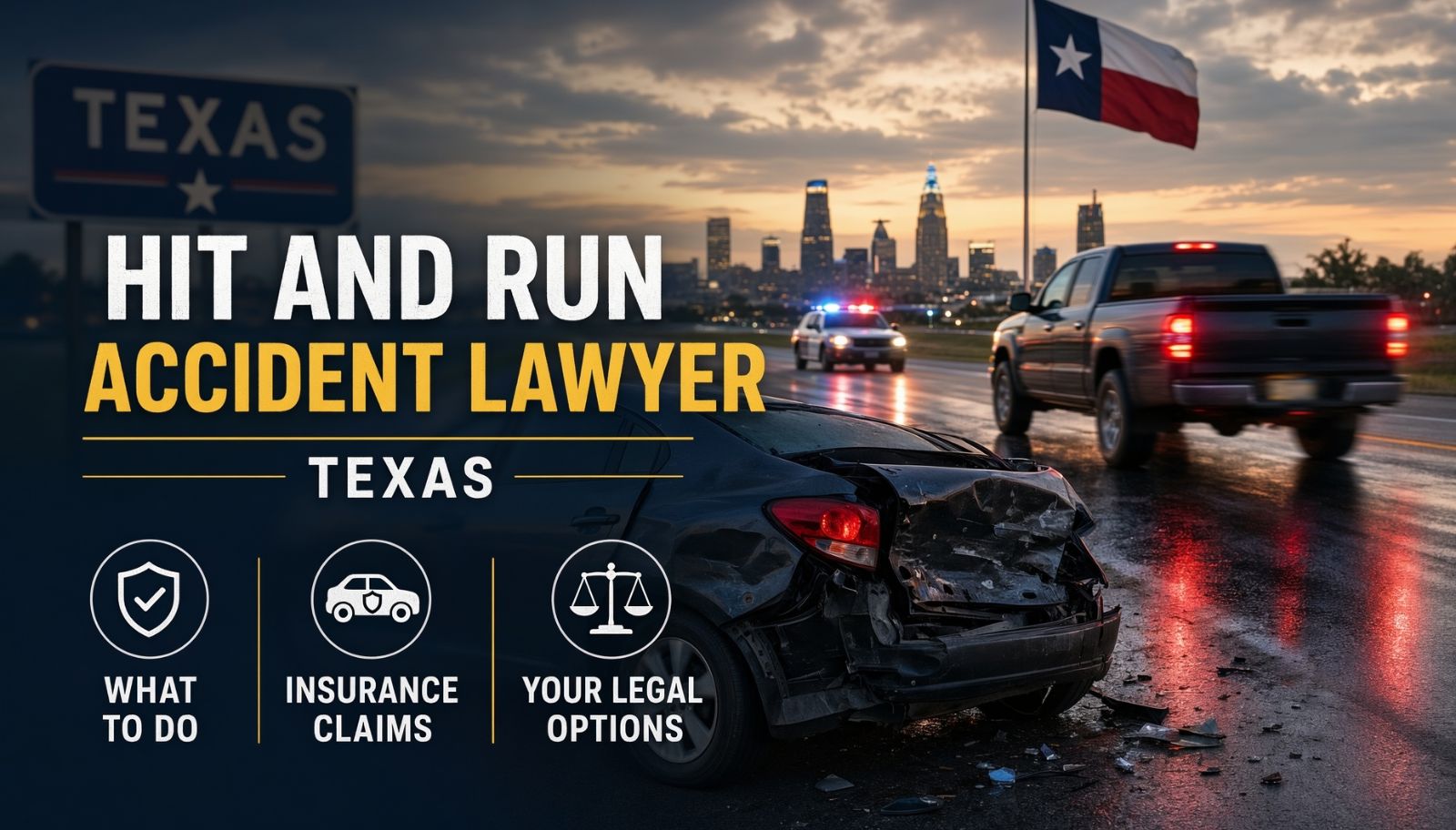
A hit-and-run crash can leave you with something that feels almost as difficult as the injuries themselves: no driver’s name, no insurance information, and no clear idea who will pay your medical bills or repair your vehicle.
But a driver disappearing from the scene does not necessarily mean you have no legal options.
Texas law requires drivers involved in certain collisions to stop, remain at the scene, provide identifying information, and provide reasonable assistance to injured people. When the driver leaves, the case can involve two separate tracks: the effort to identify the driver and a potential insurance claim through your own uninsured motorist coverage.
This guide explains what Texas law requires, what you should do after a hit-and-run, when a Texas hit and run accident lawyer can help, how uninsured motorist coverage works, what compensation may be available, and what deadlines could affect your claim.
Important: This article provides general legal information, not individualized legal advice. Texas statutes and insurance policies can produce different results depending on the facts of a particular crash. Have a qualified Texas attorney review your situation before relying on this information for a specific claim.
What Should You Do After a Hit-and-Run in Texas?
After a hit-and-run accident in Texas, prioritize safety and medical care, call law enforcement, document the crash, identify witnesses, preserve video and other evidence, notify your insurance company promptly, and review your policy for uninsured motorist or collision coverage.

Texas Department of Insurance guidance specifically recommends calling police when the other driver leaves the scene and obtaining the police report. TDI also recommends documenting the location, time, road conditions, damage, witnesses, and other available evidence.
If the fleeing driver is identified, you may be able to pursue a claim against that driver and the driver’s insurer. If the driver cannot be identified, your own uninsured/underinsured motorist coverage may provide a potential path to compensation, provided your policy covers the loss and the statutory requirements are satisfied. Texas law requires actual physical contact for UM recovery when the vehicle’s owner or operator is unknown.
What Is a Hit-and-Run Accident in Texas?
A hit-and-run generally occurs when a driver involved in a collision leaves without fulfilling the legal duties that apply after the crash.
Texas Transportation Code Section 550.021 applies when a collision results, or is reasonably likely to result, in injury or death. The driver must immediately stop, return if necessary, determine whether someone is involved and needs aid, and remain until the required information and assistance duties are completed.
Read Full Guide: Car Accident Lawyer in Texas
Texas law also imposes duties when a collision causes only vehicle damage. Section 550.022 generally requires the driver to stop, return if necessary, and remain until the required information is exchanged. For property-only collisions covered by that section, leaving can be a Class C misdemeanor when total vehicle damage is less than $200 and a Class B misdemeanor when damage is $200 or more.
That distinction matters because not every Texas hit-and-run is legally classified the same way.
Texas Hit-and-Run Penalties at a Glance
| Situation | Potential Texas offense |
|---|---|
| Hit-and-run resulting in death | Second-degree felony |
| Hit-and-run resulting in serious bodily injury | Third-degree felony |
| Hit-and-run resulting in other injury | Up to 5 years in TDCJ or up to 1 year in county jail, a fine up to $5,000, or both |
| Property-only collision, damage under $200 | Class C misdemeanor |
| Property-only collision, damage $200 or more | Class B misdemeanor |
These are the classifications contained in Texas Transportation Code Sections 550.021 and 550.022.
The criminal classification, however, is only one part of the victim’s situation. Your ability to obtain compensation is a separate civil and insurance issue.
What Does Texas Law Require a Driver to Do After a Crash?
For a collision involving injury or death, Texas Transportation Code §550.021 requires the driver to:
- Stop immediately at the scene or as close to it as possible.
- Return immediately if the vehicle was not stopped at the scene.
- Determine whether a person is involved and whether that person needs aid.
- Remain until the requirements of §550.023 are satisfied.
Section 550.023 requires the driver to provide information including the driver’s name and address, vehicle registration number, and motor vehicle liability insurer. The driver must also show a driver’s license when requested and available and provide reasonable assistance to an injured person when necessary or requested.
In other words, a driver cannot simply decide that a crash is inconvenient and drive away.
What If the Driver Says the Collision Was Not Their Fault?
Fault and the duty to stop are separate questions.
A driver may dispute who caused the collision, but that does not automatically eliminate the statutory duties that apply after a crash. The obligation to stop and provide required information is triggered by the circumstances described in the Transportation Code.
For the victim’s civil claim, however, proving that the other driver was responsible for the injuries or property damage can still require evidence of what happened.
That is where evidence becomes critical.
What Should You Do Immediately After a Texas Hit-and-Run?
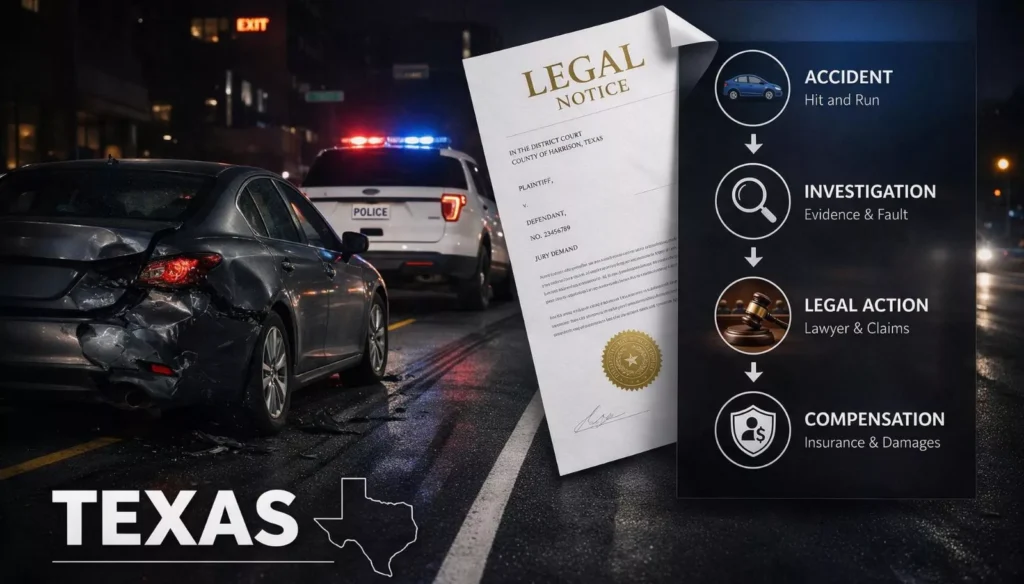
The first few decisions after the crash can affect both your health and the evidence available later.
1. Get to a Safe Location
If it is safe and your vehicle can be moved, get yourself and the vehicle out of an active traffic lane.
Do not chase the fleeing vehicle. A second collision can turn an already serious situation into something much worse.
Texas Department of Transportation guidance says drivers should call police when another driver leaves the scene, when someone is injured, or when other circumstances make police involvement appropriate.
2. Call Police
Report the hit-and-run as soon as possible.
Tell the officer everything you remember, even if you only have partial information:
- License plate numbers or partial plates
- Vehicle make and model
- Vehicle color
- Body style
- Direction of travel
- Location
- Approximate speed
- Driver description
- Distinctive damage
- Stickers, decals, or business markings
- Whether the vehicle had other occupants
A partial license plate can be valuable when combined with the vehicle description, location, time, and camera evidence.
Texas Department of Insurance specifically states that you should call police when a driver leaves the scene and notes that UM coverage will not pay for a hit-and-run accident if the crash was not reported to police.
3. Seek Medical Attention
Some injuries are immediately obvious. Others become noticeable later.
Do not assume that feeling relatively normal immediately after a collision means there is no injury.
Keep copies of:
- Emergency room records
- Doctor notes
- Diagnostic imaging
- Prescriptions
- Physical therapy records
- Medical bills
- Follow-up appointments
- Work absence documentation
Your medical documentation can become important when an insurer questions the severity, timing, or cause of an injury.
4. Photograph the Scene
Take photographs of your vehicle and the crash scene from different angles.
Photograph:
- Vehicle damage
- Paint transfer
- Broken parts
- Debris
- Tire marks
- Road signs
- Traffic signals
- Nearby businesses
- Intersections
- Street names
- The general road layout
- Any visible surveillance cameras
Texas Department of Insurance recommends taking photographs and documenting the location, time, conditions, and other details of an accident.
5. Find Witnesses
A witness who watched the other driver leave can sometimes provide information that the victim does not have.
Get names and contact information when possible.
A witness might remember:
“It was a silver pickup.”
That may sound insignificant. But combined with a partial plate, a timestamp, and nearby camera footage, it could become a meaningful investigative lead.
Why the First Few Days Matter in a Hit-and-Run Case
This is one of the biggest differences between a normal collision and a hit-and-run.
A normal crash often gives you the other driver’s identity immediately.
A hit-and-run may give you only a shrinking trail of evidence.
Security footage can be overwritten. Dashcam files can disappear. Businesses can change their recording systems. Witnesses can forget details. Vehicle damage can be repaired before investigators fully document it.
That is why an attorney investigating a serious hit-and-run may focus on evidence preservation early rather than waiting for everything to happen through the insurance process.
Potential evidence can include:
- Traffic-camera footage
- Business surveillance
- Apartment or HOA cameras
- Doorbell cameras
- Dashcam footage
- Cellphone video
- Witness statements
- Vehicle debris
- Paint transfer
- Vehicle parts
- License-plate information
- Accident-scene photographs
- Police records
- Medical records
- Vehicle repair records
The exact investigative tools available depend on the crash and jurisdiction.
Can Police Find a Hit-and-Run Driver in Texas?
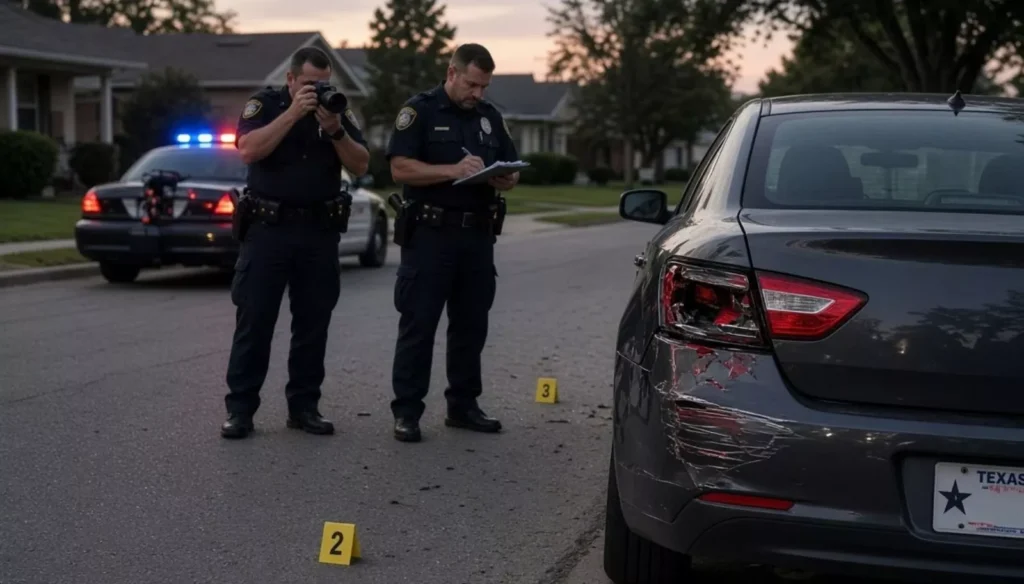
Sometimes they can, but there is no guarantee.
The likelihood of identifying the driver depends heavily on the evidence available.
For example, investigators may have more to work with when:
- A witness recorded the license plate
- A camera captured the vehicle
- The vehicle has distinctive damage
- The driver was captured entering or leaving a nearby business
- The crash occurred at a heavily monitored intersection
- Debris identifies the vehicle type
- Multiple witnesses provide matching descriptions
Even a partial plate can potentially narrow an investigation when combined with other information.
Texas also maintains a statewide crash-record system. TxDOT is the custodian of Texas crash records, and certain law-enforcement crash reports can be obtained by people directly concerned with a crash or who otherwise have a proper interest under Texas law.
Can a Lawyer Investigate a Hit-and-Run?
Yes. Depending on the case, a lawyer may help coordinate evidence preservation, investigate available leads, communicate with witnesses, evaluate surveillance possibilities, work with investigators, and pursue the civil claim while law enforcement handles its own investigation.
The important point is that the criminal investigation and the victim’s compensation claim do not have to be treated as the same process.
A police investigation seeks to determine whether a crime occurred and identify the responsible person.
A personal injury lawyer is focused on protecting the victim’s civil and insurance interests.
Can You Sue a Hit-and-Run Driver in Texas?
Yes, potentially, if the driver is identified and the facts support a civil claim.
The fact that someone committed a hit-and-run does not automatically determine every element of a civil personal injury case. A claim still generally requires evidence connecting the defendant’s conduct to the collision and the resulting damages.
If the driver is identified, possible sources of recovery can include:
- The driver’s liability insurance
- The driver’s personal assets, depending on collectability
- Your own UM/UIM coverage in situations where it applies
- Other potentially responsible parties, depending on the facts
Texas requires minimum automobile liability limits of $30,000 for bodily injury to one person, $60,000 for bodily injury to two or more people in one collision, and $25,000 for property damage. Drivers may carry higher limits.
A minimum policy may not be enough to cover serious injuries, which is one reason the available insurance policies need to be identified early.
What If the Hit-and-Run Driver Is Never Found?
This is where uninsured motorist coverage can become especially important.
Texas Department of Insurance explains that uninsured/underinsured motorist coverage can provide protection when the responsible driver does not have insurance, does not have enough insurance, or is a hit-and-run driver who cannot be identified.
Texas Insurance Code §1952.101 establishes UM/UIM coverage requirements, while §1952.104 requires policies to contain a physical-contact requirement when an unknown vehicle is responsible for bodily injury or property damage.
There is an important practical distinction here.
If the Unknown Vehicle Actually Hit You
You may have a potential UM claim, subject to the terms of your policy and Texas law.
If the Driver Never Touched Your Vehicle
Suppose a vehicle cuts you off, you swerve to avoid it, and you crash into a barrier without physical contact with the unknown vehicle.
That situation can be substantially different because Texas UM policy requirements include actual physical contact when the responsible vehicle is unknown. Do not assume every unidentified-driver accident automatically qualifies for UM benefits.
This is one of the reasons hit-and-run insurance claims can require careful legal analysis.
Does Uninsured Motorist Insurance Cover a Hit-and-Run in Texas?
It can.
Texas insurers must offer uninsured/underinsured motorist coverage, but a policyholder can reject that coverage in writing.
Depending on the policy, UM/UIM coverage may provide benefits for losses such as:
- Medical expenses
- Bodily injury
- Property damage
- Pain and suffering
- Rental expenses
- Other covered losses
Texas Department of Insurance specifically states that UM/UIM coverage can pay for vehicle repairs, property in the vehicle, medical bills, pain and suffering, and diminished value, subject to the applicable coverage and policy terms.
What if I have Collision Coverage but No UM Coverage?
Collision coverage may pay for repairs to your own vehicle after a collision, subject to the deductible and policy terms.
But collision coverage and UM/UIM coverage serve different purposes.
Collision coverage generally addresses damage to your vehicle.
UM/UIM coverage can provide a potential source of recovery for qualifying losses caused by an uninsured, underinsured, or qualifying hit-and-run driver.
Texas Department of Insurance confirms that both collision coverage and UM/UIM property-damage coverage may pay for vehicle repairs following a hit-and-run.
Do You Have to Report a Hit-and-Run to Your Insurance Company?
You should notify your insurer as soon as reasonably possible and review your policy for its notice requirements.
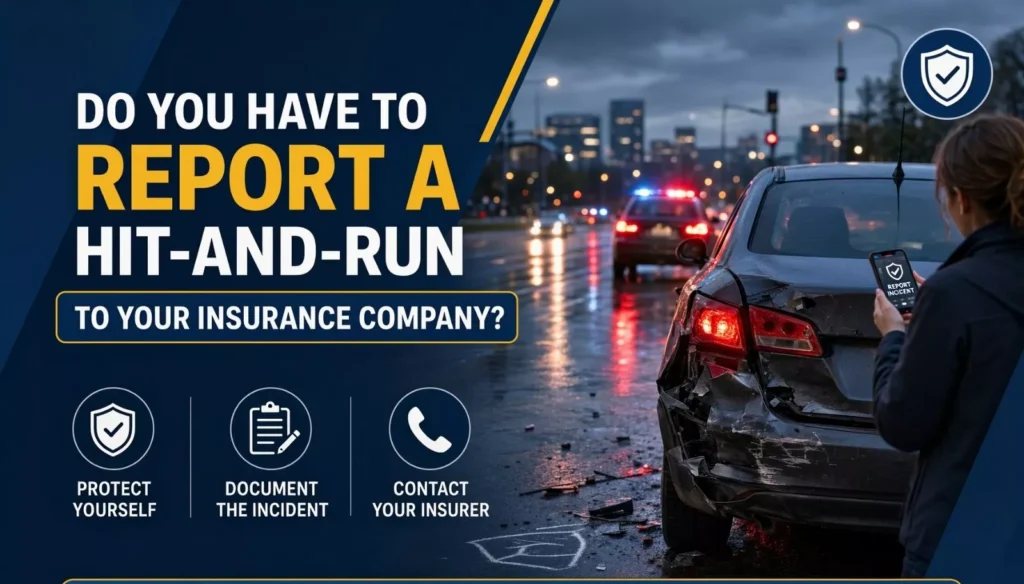
Texas Department of Insurance advises people to file insurance claims as soon as they can and keep records of communications with the insurance company, including the adjuster’s name and information requested by the insurer.
Do not assume that calling your insurer means you have agreed to the insurer’s valuation of the claim.
A claim is not the same thing as a settlement.
And you generally should understand what you are signing before accepting a settlement or release, particularly when injuries are serious or continuing.
What Compensation Can You Recover After a Texas Hit-and-Run?
There is no universal “average hit-and-run settlement.”
The value of an individual case depends on factors such as liability evidence, insurance coverage, injury severity, treatment, lost income, future damages, property damage, and whether the responsible driver is identified.
Potential compensatory damages in a Texas personal injury case can include both economic and noneconomic losses. Texas law defines noneconomic damages to include categories such as physical pain and suffering, mental or emotional anguish, disfigurement, physical impairment, loss of consortium, loss of companionship and society, inconvenience, and loss of enjoyment of life.
Depending on the circumstances, a claim may involve:
Economic Damages
Economic losses can include documented financial losses such as:
- Medical expenses
- Future medical costs
- Lost wages
- Reduced earning capacity
- Property damage
- Other qualifying out-of-pocket losses
Noneconomic Damages
These may include:
- Physical pain and suffering
- Mental anguish
- Physical impairment
- Disfigurement
- Loss of enjoyment of life
- Loss of consortium
- Loss of companionship and society
Not every category applies to every case, and the available damages depend on the nature of the claim and supporting evidence.
Can You Receive Compensation if You Were Partly at Fault?
Potentially, yes.
Texas follows a proportionate-responsibility system for applicable tort claims.
Under Texas Civil Practice and Remedies Code §33.001, a claimant whose percentage of responsibility is greater than 50% cannot recover damages in an action to which that chapter applies. When a claimant is not barred from recovery, §33.012 provides for a reduction based on the claimant’s percentage of responsibility.
For example, if a claimant were found 20% responsible in a case where proportionate responsibility applies, the damages could be reduced by that percentage.
This is another reason evidence matters.
An insurer might dispute not only how badly someone was injured, but also who was responsible for the crash.
How Does a Hit-and-Run Lawyer Help?
A Texas hit-and-run accident lawyer can potentially take over several complicated parts of the case.
Investigating the Crash
The attorney may help identify and preserve evidence, locate witnesses, review photographs and vehicle damage, and coordinate investigative work.
Identifying the Driver
If there are viable leads, the investigation may focus on:
- Camera footage
- Witnesses
- License-plate information
- Vehicle descriptions
- Debris
- Paint transfer
- Repair records
- Other physical evidence
There is no guarantee that the driver will be located.
Handling the Insurance Claim
A lawyer can review your insurance policy and determine which coverage may apply, including UM/UIM, collision, PIP, or other available coverage.
Texas Department of Insurance states that PIP can provide benefits for medical expenses and certain income-related losses, while UM/UIM can apply to qualifying uninsured, underinsured, and hit-and-run situations.
Documenting Your Injuries
An attorney can help organize medical records, bills, employment records, treatment history, and evidence concerning how the injury affects daily life.
Negotiating With Insurers
A serious injury claim can involve disputes about:
- Whether the unknown vehicle caused the crash
- Whether physical contact occurred
- Whether the injuries were caused by the accident
- Whether treatment was necessary
- Whether the treatment was reasonable
- The value of future damages
- The amount of available insurance coverage
A lawyer can handle communications and negotiations while building the evidentiary record needed to support the claim.
Filing a Lawsuit When Appropriate
A lawsuit may become necessary if a responsible driver is identified and the parties cannot resolve the claim, or when an insurance dispute cannot be resolved through negotiation.
The decision depends on the facts, applicable deadlines, insurance policy, evidence, and expected recovery.
How Long Do You Have to File a Hit and Run Injury Claim in Texas?
For many Texas personal injury claims, the statute of limitations is two years.
Texas Civil Practice and Remedies Code §16.003 generally requires an action for personal injury to be brought no later than two years after the cause of action accrues. The statute also generally provides a two-year limitations period for an action involving injury resulting in death, with the death-related accrual rule specified by the statute.
But there is an important warning:
Do not treat two years as a personal deadline for every part of a hit-and-run claim.
Insurance policies can contain their own notice and procedural requirements, and special facts can affect how deadlines apply.
Waiting can also make evidence harder to obtain.
The safer approach is to report the crash promptly, preserve evidence, notify the appropriate insurers, and obtain case-specific legal advice early.
Does a Police Report Automatically Give You a Strong Civil Case?
No.
A police report can be extremely important, but it is only one piece of evidence.
The strength of a civil claim can depend on the total evidentiary picture, including:
- Photographs
- Witness statements
- Video
- Vehicle damage
- Medical records
- Expert evidence when necessary
- Insurance records
- Crash reconstruction
- Driver admissions
- Police investigation
- Physical evidence
Texas law requires law enforcement officers investigating certain reportable collisions to submit written crash reports, and TxDOT maintains the state’s crash records.
A strong case is built from the evidence, not from one document alone.
What Happens if the Hit-and-Run Driver Is Found Later?
The case can change significantly.
Once the driver is identified, you may have additional avenues for recovery.
The investigation may establish:
- Who was driving.
- Which vehicle was involved.
- Whether the driver left the scene.
- How the crash occurred.
- Whether the driver was negligent.
- Whether insurance existed.
- Whether other sources of insurance or liability exist.
- What damages resulted from the crash.
The driver’s criminal case, if any, remains a matter for law enforcement and prosecutors.
Your compensation claim is a separate civil matter.
An arrest or criminal charge does not automatically determine the value of your personal injury claim.
What Evidence Should You Give a Hit and Run Lawyer?
Bring everything you have, even information that seems insignificant.
Crash Evidence
- Police report or report number
- Photographs
- Videos
- Dashcam footage
- Vehicle repair estimates
- Towing records
- Photos of debris
- Photos showing paint transfer
Driver Information
- Partial license plate
- Vehicle description
- Color
- Make and model
- Direction of travel
- Driver description
- Identifying stickers or markings
Witness Information
- Names
- Phone numbers
- Emails
- Written statements
- Photos or videos taken by witnesses
Medical Evidence
- Hospital records
- Physician records
- Diagnostic tests
- Prescriptions
- Medical bills
- Treatment records
Financial Evidence
- Pay stubs
- Employer documentation
- Missed-work records
- Self-employment income documentation
- Receipts for accident-related expenses
The more organized the evidence, the easier it can be for an attorney to evaluate the claim.
Hit and Run Accidents Involving Pedestrians, Cyclists, and Motorcyclists
Hit-and-run cases are not limited to two passenger vehicles.
A fleeing driver may strike:
- A pedestrian
- Cyclist
- Motorcyclist
- Passenger
- Commercial vehicle
- Parked vehicle
Crashes involving pedestrians and cyclists can create particularly important evidence questions because the point of impact, vehicle damage, road debris, witnesses, and nearby cameras may become critical in identifying the vehicle.
The same principle applies: document what happened, report it promptly, preserve evidence, and avoid destroying or altering physical evidence unnecessarily.
Hit-and-Run in a Parking Lot or Private Property
Texas Transportation Code Chapter 550 contains applicability provisions covering certain roads, private access ways or parking areas provided to customers by businesses, and highways or other public places.
A parking-lot collision can therefore still create legal and insurance issues.
For example, if someone strikes your vehicle outside a grocery store and drives away, immediately look for:
- Store surveillance cameras
- Parking-lot cameras
- Nearby businesses
- Witnesses
- License-plate information
- Security personnel
- Vehicle debris
Do not assume that because the crash happened in a parking lot, there is no evidence.
What If Someone Hit My Parked Car and Left?
Texas Transportation Code §550.024 specifically addresses collisions involving an unattended vehicle.
The driver is required to stop and either locate the owner or leave a conspicuous written notice containing the required information and circumstances of the collision. Violations can be a Class C or Class B misdemeanor depending on the amount of damage.
As the vehicle owner, you should:
- Photograph the damage.
- Photograph debris and paint transfer.
- Ask nearby businesses about cameras.
- Ask witnesses for contact information.
- Notify police.
- Notify your insurer.
- Preserve any camera footage you obtain.
- Keep repair estimates and receipts.
Your coverage could depend on whether you have collision coverage, qualifying UM/UIM property-damage coverage, or another applicable policy provision.
What If the Hit and Run Driver Has No Insurance?
An identified driver without insurance can create a different problem from an unidentified driver.
Texas requires motorists to maintain financial responsibility, with minimum liability amounts commonly described as 30/60/25.
But minimum liability insurance does not mean every injured victim will be fully compensated.
If the responsible driver is uninsured or does not have sufficient coverage, your own UM/UIM coverage may become important.
Texas Department of Insurance explains that UM/UIM coverage is designed to help when the responsible motorist has no insurance, insufficient insurance, or leaves the scene and cannot be identified.
Should You Talk to the Insurance Adjuster Without a Lawyer?
For a minor property-damage claim, handling an insurance claim yourself may be straightforward.
A serious hit-and-run injury claim can be much more complicated.
Consider getting legal advice before giving a recorded statement, signing a broad release, or accepting a settlement when:
- You suffered serious injuries.
- Your treatment is ongoing.
- The other driver is unidentified.
- You are making a UM/UIM claim.
- Your insurer disputes coverage.
- Your insurer disputes fault.
- You cannot determine your future medical needs.
- You missed substantial work.
- Your injuries affect your ability to work.
- There is a death or catastrophic injury.
The goal is not to make every accident into a lawsuit.
The goal is to understand what you may be giving up before you agree to a final resolution.
How Much Does a Hit and Run Accident Lawyer Cost in Texas?
Personal injury lawyers commonly offer different fee arrangements, and many work on a contingency-fee basis in appropriate cases.
Under a contingency arrangement, the attorney’s fee is generally tied to recovery rather than an hourly payment, but the exact percentage, litigation costs, case expenses, and payment structure depend on the written agreement.
Before hiring an attorney, ask:
- What percentage is the attorney’s fee?
- Does the percentage change if a lawsuit is filed?
- Who pays litigation expenses?
- What happens if there is no recovery?
- Are expert fees included?
- Are medical liens or reimbursement claims involved?
- Can I speak directly with the lawyer handling my case?
Do not rely on a verbal description of fees. Read the representation agreement.
When Should You Hire a Texas Hit-and-Run Accident Lawyer?
You do not necessarily need an attorney for every minor crash.
Legal representation becomes more valuable when the case involves substantial injuries, disputed liability, unidentified drivers, significant insurance coverage, or a complicated UM/UIM claim.
A consultation can be particularly useful when you are asking:
“The driver is gone, but I was injured. Who is actually responsible for paying me?”
That answer may depend on evidence and insurance coverage that are not obvious from the police report alone.
Your First 24-Hour Hit-and-Run Checklist
At the scene
Safety first. Move to a safe location when possible.
Call police. Report that the other driver left.
Seek medical care. Do not ignore injuries because they were not immediately obvious.
Document the vehicle. Write down everything you remember.
Photograph the crash. Capture your damage, the road, signs, debris, and surrounding area.
Find witnesses. Get names and contact information.
After leaving the scene
Notify your insurance company.
Ask about UM/UIM and collision coverage.
Preserve photographs and video.
Identify nearby cameras.
Save medical bills and records.
Keep receipts for accident-related expenses.
Do not rush into a settlement.
Consider a Texas personal injury lawyer if the injuries or claim are significant.
Texas Department of Insurance recommends promptly reporting the accident, documenting evidence, preserving receipts, and keeping records of communications with the insurer.
The Most Important Thing to Understand About a Texas Hit-and-Run
The driver leaving does not end the investigation.
It changes the investigation.
Instead of simply exchanging insurance information, you may need to answer several different questions:
Who was driving?
Can the vehicle be identified?
Was there physical contact?
What insurance coverage applies?
Was UM/UIM coverage rejected?
What evidence proves the crash occurred the way you say it did?
What injuries and financial losses resulted?
What deadlines apply?
Those questions should be addressed together rather than separately.
Frequently Asked Questions About Hit-and-Run Accidents in Texas
What should I do if someone hits me and drives away in Texas?
Call police, seek medical attention if needed, document the crash, collect witness information, preserve video and physical evidence, and notify your insurer promptly. Texas Department of Insurance specifically recommends calling police when the other driver leaves the scene.
Is a hit-and-run a felony in Texas?
It can be. A hit-and-run involving death is a second-degree felony under Texas Transportation Code §550.021. A collision involving serious bodily injury is a third-degree felony. Other injury cases are subject to the punishment specified in the statute. Property-only hit-and-runs under §550.022 can be Class C or Class B misdemeanors depending on the amount of damage.
Can I sue a hit-and-run driver if they are caught?
Potentially. Once the driver is identified, you may be able to pursue a civil claim if the facts establish legal responsibility and compensable damages. The criminal case and civil claim are separate matters.
Can I get money if the hit-and-run driver is never found?
Potentially. Your own uninsured motorist coverage may provide a source of compensation if the applicable requirements are satisfied. Texas law requires actual physical contact for UM recovery when the responsible vehicle is unknown.
Does Texas UM insurance cover hit-and-run accidents?
It can. Texas Department of Insurance states that UM/UIM coverage can apply to qualifying hit-and-run accidents involving an unidentified driver. Policy terms and statutory requirements still matter.
Do I have uninsured motorist coverage automatically?
Not necessarily. Texas insurers must offer UM/UIM coverage, but a policyholder can reject it in writing. Check your policy and any signed rejection.
Does UM coverage pay for my car damage?
It can. Texas Department of Insurance states that UM/UIM coverage may pay for car repairs and property damage, while collision coverage is another potential source for vehicle damage after a hit-and-run.
What if the other driver was never identified but hit my car?
You may still have an insurance claim, particularly under qualifying UM/UIM coverage. However, Texas law’s physical-contact requirement is important when the responsible vehicle is unknown.
What if I swerved to avoid a hit-and-run driver and never hit their vehicle?
That situation can be more difficult. Texas UM policy provisions contain a physical-contact requirement for an unknown vehicle. Other insurance or legal theories may need to be evaluated based on the specific facts.
How long do I have to file a personal injury lawsuit after a Texas hit-and-run?
Texas generally provides a two-year limitations period for personal injury actions, subject to statutory exceptions and specific circumstances. Insurance-related deadlines can also matter, so it is better not to wait until the end of the limitations period to seek legal advice.
Can I recover if I was partly responsible for the accident?
Potentially. Texas proportionate-responsibility rules generally prevent recovery when the claimant’s responsibility is greater than 50% in an applicable action, and damages can be reduced according to the claimant’s percentage of responsibility.
What evidence is most useful in a hit-and-run case?
Useful evidence may include surveillance video, dashcam footage, witness information, partial license-plate numbers, photographs, vehicle debris, paint transfer, police records, medical records, and repair documentation.
Should I contact a hit-and-run lawyer before accepting an insurance settlement?
For a serious injury or disputed UM/UIM claim, getting legal advice before signing a final settlement or release can help you understand what rights you may be giving up.
Talk to a Texas Hit-and-Run Accident Lawyer Before the Evidence Disappears
A hit-and-run can make an ordinary accident claim much more complicated.
You may be dealing with injuries while also trying to identify a vehicle, locate witnesses, preserve surveillance footage, understand your insurance policy, and determine who is responsible for your losses.
You do not need to have every answer before speaking with an attorney.
A Texas hit-and-run accident lawyer can review the available evidence, explain the potential insurance options, assess applicable deadlines, and help you understand whether pursuing a claim makes sense based on the facts of your accident.
Do not assume that an unidentified driver means you have no claim.
Report the crash. Preserve the evidence. Review your insurance coverage. And before accepting a significant settlement, understand exactly what compensation may be available and what rights you could be giving up.

Marvin Lambert
Marvin LambertMarvin Lambert is a finance professional and financial advisor specializing in lending solutions, Car Insurance, personal finance, and consumer credit education. Through his writing, he helps readers understand practical money management strategies, borrowing decisions, and financial planning concepts in simple, actionable terms.
Pingback: Car Accident Lawyer in Texas: Claims, Costs & Legal Options