
Looking for car insurance quotes in Ontario? Compare rates, discover discounts, and choose the right coverage for your budget.
Getting a speeding ticket in Ontario is stressful enough on its own. But what follows — the uncertainty about your insurance renewal, the worry about rising premiums, the questions about whether your insurer will even keep your policy — can feel just as heavy as the ticket itself.
The truth is that a single speeding ticket, particularly a minor one, is not the disaster most drivers imagine it to be. What matters far more is how you respond to it. Drivers who do nothing and simply wait for renewal often end up overpaying. Drivers who understand how the system works, choose the right insurer for their situation, and take the right steps at the right time can manage the damage far more effectively than they expect.
Car Insurance Quotes in Ontario Comparison
| Insurer | Market Type | Best For | Key Advantage | Access |
|---|---|---|---|---|
| Intact Insurance | Standard | 1 minor conviction, mixed profiles | Broad underwriting appetite with telematics discounts of up to 25%. | Broker or Belairdirect online |
| Aviva Insurance | Standard | Drivers with Minor Conviction Protector | First minor conviction may be forgiven when protection is purchased beforehand. | Broker only |
| Economical Insurance | Standard | 1–2 minor convictions | Competitive broker pricing with broad availability. | Broker only |
| CAA Insurance | Standard | One ticket with a long clean driving history | High customer satisfaction and defensive driving discounts. | Direct or broker |
| Jevco Insurance | Non-Standard | Multiple convictions or major offences | High-risk specialist backed by Intact with flexible coverage options. | Broker only |
| Coachman Insurance | Non-Standard | Multiple tickets or at-fault accidents | Flexible underwriting backed by SGI Canada. | Broker only |
| Echelon Insurance | Non-Standard | Young high-risk drivers rebuilding their record | Popular broker choice for drivers under 25. | Broker only |
| PAFCO Insurance | Non-Standard | Drivers just outside standard eligibility | Good transition option for moderate-risk drivers. | Broker only |
| Facility Association | Last Resort | Drivers declined by private insurers | Provides legally required coverage for eligible Ontario drivers. | Licensed Ontario broker |
This guide covers everything you actually need to know — how Ontario insurers classify speeding tickets, how much your rates are likely to go up, which companies handle conviction records with more flexibility, and what practical steps you can take today to protect your premium.
What Happens to Your Insurance After a Speeding Ticket in Ontario
The first thing to understand is timing. Your insurer does not find out about your speeding ticket the moment it is issued. They find out when your policy comes up for renewal, at which point they request a copy of your driver’s abstract from the Ministry of Transportation. That abstract lists every conviction on your record, and the moment you paid your fine — or were found guilty in court — that conviction appeared on it.

Paying your ticket is legally treated as an admission of guilt. That is why fighting a ticket before paying it is so important. Once you pay, the conviction is locked in.
From that point, the conviction stays on your driving record for three years from the date of guilt, not from the date you received the ticket. Your insurer will see it every time they pull your abstract during that window, which typically happens at each annual renewal. After three years, it drops off and can no longer be used to affect your rate — though the rate itself does not automatically adjust downward the day it disappears. That adjustment also happens at renewal.
How much your rate increases depends on three things: the severity of the ticket, your existing driving history, and which insurance company you are with. Different insurers use different underwriting models, and the same conviction can result in a 5 percent increase at one company and a 20 percent increase at another. That gap is real, and it is exactly why shopping around after a ticket matters so much.
Minor, Major, and Criminal Convictions — Why the Classification Changes Everything
Ontario insurers do not treat all speeding tickets the same way. Before anything else, you need to understand which category your ticket falls into, because this determines the entire shape of the conversation with your insurer.
Minor convictions cover most typical speeding tickets — travelling anywhere from just over the limit up to 49 km/h over. A single minor conviction with an otherwise clean record will usually result in a modest rate increase at renewal, often in the range of 10 to 20 percent depending on your insurer. Some companies may not increase your rate at all for a first minor offence, especially if you have a long, clean history with them.
Major convictions begin at 50 km/h or more over the posted limit, and the insurance consequences are severe. At this level, expect your rates to potentially double at renewal. Some insurers will decline to renew your policy outright, which means you will need to find a new insurer — often in the non-standard or high-risk market. If the speeding was accompanied by a stunt driving charge, the financial consequences extend well beyond insurance: fines up to $10,000, a license suspension of up to three years, and possible jail time are all on the table before insurance even enters the picture.
Criminal convictions — including dangerous driving, impaired driving, or hit and run — are in a completely different category. These carry the most severe insurance consequences, and many standard insurers will not offer coverage at all. You would be looking at high-risk specialists or, in extreme cases, the Facility Association, which is Ontario’s insurer of last resort.
There is also an important distinction that most drivers miss: the final conviction matters more than the original charge. If a traffic paralegal successfully argues your 50-over ticket down to a minor speeding conviction, your insurance impact drops significantly. That is not a technicality — it is a meaningful difference in how your insurer classifies your risk. For major charges especially, consulting a traffic paralegal before paying or entering a plea is almost always worth the cost.
How Much Will Your Premium Actually Go Up?
There is no single number that applies to every driver in Ontario, but here is a realistic picture of what most drivers experience based on conviction severity and history.

For a first minor conviction with a clean prior record, most drivers see somewhere between a 5 and 15 percent increase at renewal. Some insurers with conviction-free discounts will simply remove that discount rather than add a surcharge, which is a softer blow. If you were paying $1,800 per year, that might translate to an extra $90 to $270 annually — noticeable, but manageable.
For a second minor conviction within three years, the increase is usually steeper — commonly 20 to 40 percent over a clean-record rate. At this level, you are starting to look like a pattern to insurers, not a one-time mistake.
For a major conviction, the increase can range from 50 to 100 percent or more. A driver in Brampton paying $2,400 per year on a clean record could realistically be looking at $4,000 to $5,000 or higher after a major speeding conviction, depending on the insurer. Some will not quote at all, and you may have no choice but to seek non-standard coverage.
For drivers who accumulate three or more minor convictions within three years, research from insurance comparison platforms shows premium increases exceeding 250 percent when comparing clean-record rates to three-conviction rates — particularly when drivers are forced into the non-standard market. This is not a rare outcome. It can happen to someone who gets three relatively modest tickets over a few years without realizing how quickly the classification shifts.
Demerit Points vs. Convictions — What Your Insurer Actually Cares About
Many drivers assume that demerit points are what drive insurance rates up. This is a common misunderstanding that is worth clearing up directly.
Demerit points are a Ministry of Transportation tool. They are used to track driving behavior and, if you accumulate enough of them (15 for a full G license holder), to suspend your license. They stay on your record for two years from the date of the offence.
Insurance companies, on the other hand, look at convictions — not demerit points. A conviction occurs the moment you pay your fine or are found guilty. Convictions stay on your record for three years. The two systems run in parallel but are used for very different purposes.
Here is where it gets counterintuitive: a speeding ticket that carries no demerit points can still increase your insurance premium. If you were caught going 14 km/h over the limit — which does not trigger demerit points in Ontario — but you paid the fine, that conviction is on your record, and your insurer can factor it into your rate. The absence of demerit points does not protect you from an insurance surcharge.
A license suspension is a separate issue again. If you lose your license due to accumulated demerit points, that suspension can affect your insurance premiums for up to six years — far longer than a single conviction would.
Speed Camera Tickets — These Do Not Affect Your Insurance
If you received a ticket in the mail with a photo of your vehicle near a school zone or community safety area, that is an automated speed enforcement ticket, and it works completely differently from a ticket issued by a police officer.
Automated camera tickets are issued to the registered owner of the vehicle, not to the driver. Because they are not tied to any specific individual’s driving record, they do not appear on your driver’s abstract and do not affect your insurance premiums at all. The fine still needs to be paid, but from an insurance standpoint, it is invisible.
The distinction matters because many Ontario drivers confuse these two types of tickets. Only police-issued speeding tickets — where a conviction is registered in your name — affect your insurance.
Best Car Insurance Companies in Ontario After a Speeding Ticket
Here is where the real answer to your question lives, and it requires a more honest framework than most comparison articles offer. There is no single “best” company for every driver with a speeding ticket. What exists is a tiered market, and the right insurer for you depends on where your record sits.
Standard Market Insurers — For One or Two Minor Convictions
If you have a single minor speeding ticket and an otherwise clean record, you still qualify for standard market insurance. The goal at this level is to find which standard insurer penalizes your specific conviction the least. Shopping through a broker who has access to multiple carriers is the most efficient way to do this.
Intact Insurance is Canada’s largest property and casualty insurer and is known for accepting a wide range of driver profiles. They have significant underwriting flexibility and a telematics program that allows safe drivers to demonstrate improved behavior and earn discounts up to 25 percent. For a driver with one minor conviction who is otherwise low-risk, Intact is often one of the more competitively priced options.
Aviva Insurance is a strong option specifically because they offer a product called the Minor Conviction Protector — an endorsement that, if purchased in advance, can waive the premium impact of a first minor conviction. If you already have Aviva coverage and purchased this endorsement before the ticket, it shields you from the surcharge. Aviva also offers conviction-free discounts for drivers who maintain a clean record, and the removal of that discount after a first ticket is typically gentler than an outright surcharge at some other companies. They also offer solid bundling discounts if you carry home and auto together.
Economical Insurance operates through the broker channel and is known for reasonable underwriting on first-time minor offences. They are widely available across Ontario and often appear in broker shortlists for drivers with one or two convictions who are looking to stay in the standard market.
CAA Insurance has ranked as the top insurer in Ontario for customer satisfaction three years in a row in major annual studies, scoring highest for product value, communication clarity, and claims service. For drivers with a single minor conviction and a long clean history who want to stay with a trusted brand, CAA is worth including in your comparison. They also offer discounts for defensive driving courses, which can help offset a conviction surcharge.
Intact’s Belairdirect — the direct-to-consumer arm of Intact — is worth mentioning separately because it offers a digital-first experience and sometimes prices minor-conviction profiles differently than the broker channel. If you are comfortable buying online without broker guidance, it is worth getting a direct quote alongside your broker comparisons.
Non-Standard Market Insurers — For Multiple Convictions or a Major Offence
If you have a major speeding conviction, multiple minor convictions within three years, or your current insurer has declined to renew your policy, you are entering the non-standard or high-risk insurance market. Coverage here is more expensive, but it exists for exactly this reason.
Jevco Insurance (a subsidiary of Intact) is one of Ontario’s best-known high-risk auto insurers. They were built specifically to serve drivers who cannot find coverage in the standard market due to multiple convictions, license suspensions, or prior policy cancellations. Because they are part of the Intact family, they have strong financial backing and wide availability through brokers. Jevco offers customizable policies and is often the first name a knowledgeable broker reaches for when a driver has a challenging record.
Coachman Insurance (part of SGI Canada) is another specialist in non-standard auto insurance and has been operating in Ontario since 1979. They are well-suited to drivers with multiple at-fault accidents or ticket histories who cannot qualify elsewhere. Their underwriting is specifically designed for higher-risk profiles, and access is through the broker channel.
Echelon Insurance rounds out the main three non-standard options in Ontario and is frequently mentioned alongside Jevco and Coachman for drivers rebuilding their records after major convictions or multiple minor ones. Echelon is particularly noted as a top choice for younger high-risk drivers — data from Ontario brokerages shows Echelon is the most selected insurer for high-risk drivers under 25.
PAFCO Insurance (Pembridge’s non-standard division) is another option in the high-risk space and often appears in broker quotes for drivers who fall just outside standard market eligibility.
The Facility Association is the absolute last resort. If every insurer — standard and non-standard — has declined to offer you coverage, the Facility Association is legally required to provide basic coverage to any licensed Ontario driver. Premiums through the Facility Association are the highest in the market, sometimes more than double what you would pay through a non-standard specialist. The goal for anyone placed here is to keep their record clean, rebuild their history, and work toward re-qualifying for non-standard private coverage as soon as possible.
The Full Picture on High Risk Insurance Costs
If your conviction or combination of convictions pushes you into the high-risk category, it helps to understand the financial reality clearly. High-risk car insurance in Ontario costs roughly $680 per month on average, or approximately $8,100 to $8,200 per year based on industry data from 2026. Monthly payments typically range from around $470 on the lower end to nearly $900 on the higher end, depending on your specific record, your vehicle, and where you live in Ontario.
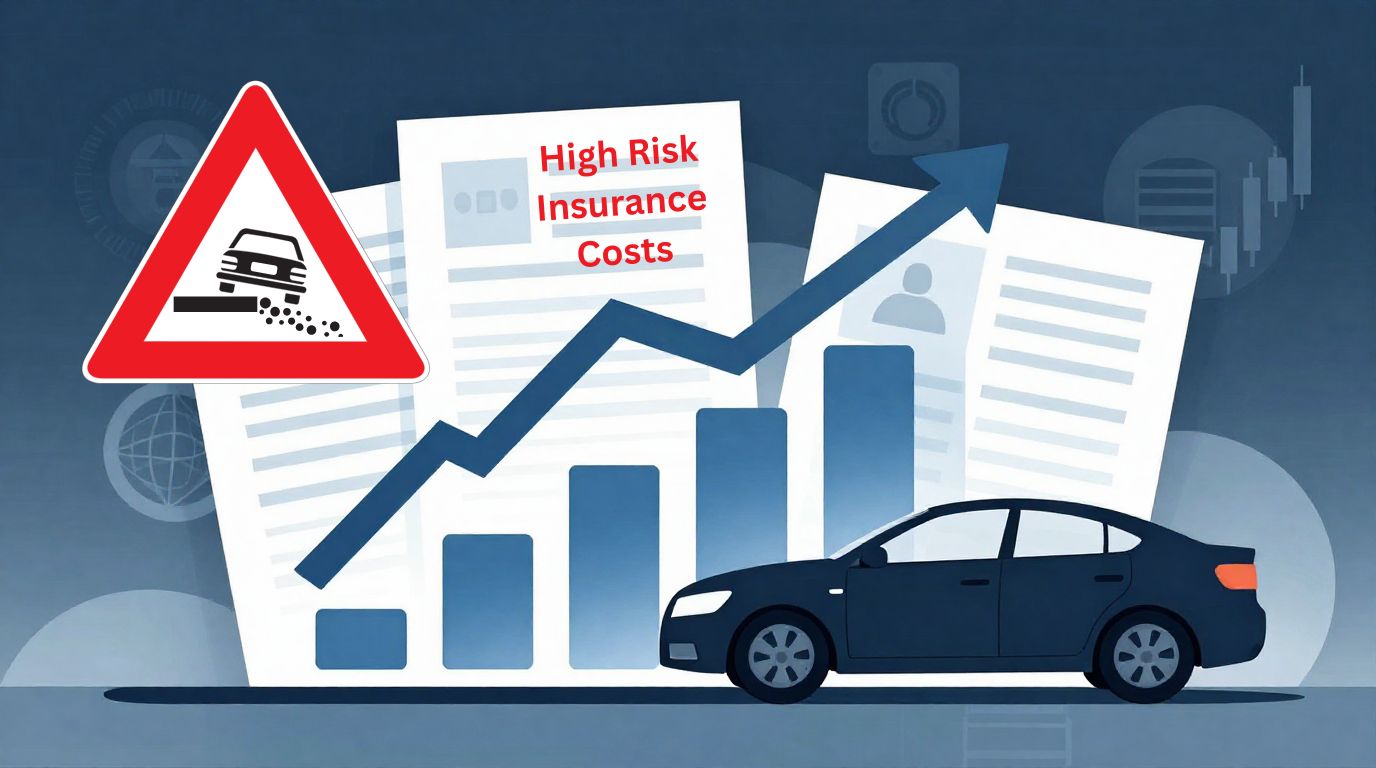
Drivers over 50 tend to pay significantly less than younger drivers even within the high-risk category. Location matters too — the GTA consistently produces the highest insurance premiums in the province, while Eastern Ontario and communities along the Ottawa Valley corridor can run 30 percent below the provincial average.
This is temporary. High-risk status is not permanent. Most drivers move back to the standard market within three to five years of keeping a clean record.
Should You Fight Your Speeding Ticket Before Paying It?
This is one of the most impactful decisions you can make, and it happens before insurance even enters the equation.
The moment you pay a speeding ticket in Ontario, you are legally admitting guilt. That conviction goes on your record immediately. If you contest the ticket and either win or have the charge reduced, the insurance impact changes dramatically — or disappears entirely.
A traffic paralegal typically charges a few hundred dollars to fight a speeding ticket, which is often far less than what you will pay in elevated insurance premiums over three years. If your ticket is a major offence — 50 km/h or more over the limit — the cost-benefit calculation is even clearer. A successful reduction from a major conviction to a minor one can mean the difference between staying in the standard insurance market and being pushed into the high-risk market.
Even getting a major ticket reduced to a lower minor ticket has real value, because some insurers will forgive a single first-time minor conviction, particularly if you have conviction protection coverage already on your policy.
The window to request a court date is printed on your ticket. Do not let it pass by default.
What to Do Right Now to Protect Your Insurance Rate
Once a conviction is on your record, you cannot erase it. But you can take practical steps that meaningfully reduce its impact.
Call your broker before renewal, not at renewal. Most drivers find out about their rate increase when they receive their renewal notice. By that point, the insurer has already decided what to charge you. If you speak to your broker a few months before renewal, they have time to shop your policy across multiple carriers and find who will price your specific conviction profile most competitively.
Ask about conviction forgiveness or a Minor Conviction Protector endorsement. Some insurers — Aviva being the clearest example — offer specific endorsements that shield you from a rate increase for a first minor conviction. These need to be on your policy before the ticket, not after. But if you are with a company that offers something similar and you have not yet received another ticket, this is worth adding now.
Enroll in a telematics program. Several Ontario insurers — including Intact, Belairdirect, and others — offer usage-based insurance programs that track your driving behavior through an app or device. If you drive safely — avoiding hard braking, late-night trips, and aggressive acceleration — these programs can deliver discounts of 10 to 25 percent. For a driver with a minor conviction surcharge, a telematics discount can partially or fully offset the increase.
Bundle your home and auto insurance. If you insure your home and car separately, consolidating them with one provider often unlocks a multi-policy discount that can reduce your total premium meaningfully. This does not erase the conviction, but it can reduce the overall rate you are paying.
Consider adjusting your deductible. Raising your deductible on collision or comprehensive coverage lowers your premium without affecting your liability limits or accident benefits. For older vehicles, you might also evaluate whether carrying collision coverage at all still makes financial sense.
Do not let your coverage lapse. Gaps in insurance are a separate red flag that insurers note on your history. Even if you are between vehicles or frustrated with your rates, maintaining continuous coverage protects your insurability.
Take a defensive driving course. Several Ontario insurers, including CAA, offer discounts to drivers who complete recognized defensive driving courses. It does not remove a conviction from your record, but it signals to insurers that you are actively working to improve your habits — and the discount is real.
What Happens When Your Insurer Declines to Renew
If your insurer sends you a non-renewal notice — which can happen after a major conviction or a combination of convictions and claims — you have rights and options.
In Ontario, insurers must give you at least 60 days written notice before refusing to renew your policy. This gives you time to find alternative coverage. The worst outcome is not having a non-renewal notice — it is letting your policy lapse by doing nothing about it.
Your first step is to contact a broker who specializes in non-standard or high-risk insurance. These brokers work with companies like Jevco, Coachman, Echelon, and PAFCO, and they understand how to present your file in the most favorable way to each company’s underwriters.
Be honest and complete when describing your record. Brokers can only find you the best option if they have accurate information. Leaving out a conviction that shows up on your abstract anyway damages your application and wastes everyone’s time.
How to Rebuild Your Record and Return to Standard Rates
The good news for anyone in the high-risk market is that the situation is temporary. Ontario’s insurance system is built around a three-year lookback window for most convictions. Keep your record clean, maintain continuous coverage, and you will see your options expand significantly as convictions age off your abstract.
Here is a realistic timeline for most drivers. In year one after a major conviction or multiple minor ones, you are likely in the non-standard market paying elevated premiums. Partway through year two, if your record has stayed clean, some brokers can begin re-shopping your policy and testing whether standard market insurers will now accept your profile. By year three, if no new convictions have appeared, you are approaching the window where the original conviction drops off entirely, and your next renewal should reflect that improvement.
The key discipline during this period is to do nothing that adds to your record. Another ticket, an at-fault claim, or a license suspension during the three-year window resets the clock in practical terms, because now you have multiple active items on your abstract simultaneously.
Final Thoughts
A speeding ticket in Ontario is not a permanent mark on your driving life — but it does require a deliberate response. The drivers who handle it worst are the ones who do nothing and assume their current insurer is automatically offering the best deal. The drivers who handle it best are the ones who understand the system, contest the ticket when it makes sense, shop their policy actively at renewal, and use every legitimate tool — telematics, bundling, defensive driving courses — to offset the impact.
The insurer that was best for you before the ticket may not be the best for you now. That is not a crisis — it is just a reason to compare.

Marvin Lambert
Marvin LambertMarvin Lambert is a finance professional and financial advisor specializing in lending solutions, Car Insurance, personal finance, and consumer credit education. Through his writing, he helps readers understand practical money management strategies, borrowing decisions, and financial planning concepts in simple, actionable terms.